
1887
The earliest record
Eastleigh & Bishopstoke Rugby Club is recorded in September, with a first known match against St Edmund's on Southampton Common.
More than a century of rugby in Eastleigh — and the story is still being written.
The roots of rugby in Eastleigh go back further than the formation of the modern club.
Research on the club's own archive records identifies September 1887 as the first known mention of an Eastleigh & Bishopstoke Rugby Club. Their first recorded match was against St Edmund's on Southampton Common.
There were several chapters before the current club was formed, including Eastleigh teams in the 1890s, Pirelli General after the First World War and, eventually, the meeting that created Eastleigh Rugby Football Club in 1931.
Nineteen people attended a meeting at Eastleigh Town Hall in the summer of 1931 and formed Eastleigh Rugby Football Club.
B Coates became the first Chairman, LJ Woodward the first captain, G White the Honorary Secretary and LO Scott the Honorary Treasurer.
Black & amber became the club colours.Red was added to the shirts to avoid clashes with other local clubs. Black, red and gold would become part of the club's visual identity.
Eastleigh & Bishopstoke Rugby Club is recorded in September, with a first known match against St Edmund's on Southampton Common.
A known team photograph dates from the 1891/92 season, when Eastleigh played Portsmouth RFC in the Hampshire County Challenge Cup final.
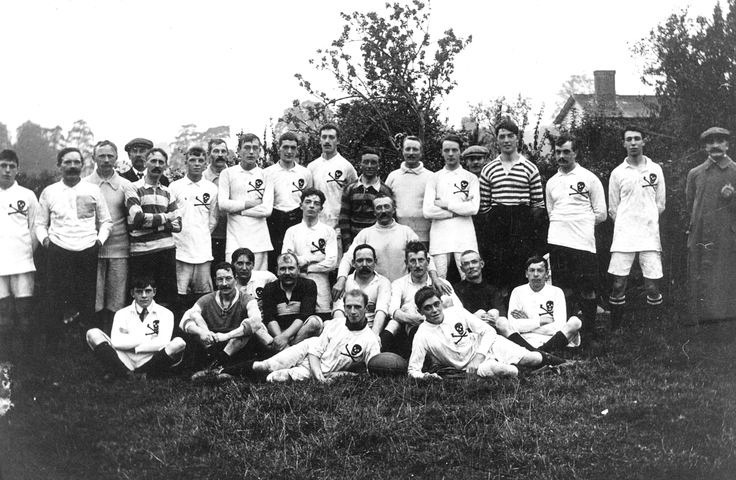
The modern club is established at a Town Hall meeting. Home matches are played at Fleming Park, with socialising centred on The Home Tavern.
The first team records 21 wins from 25 matches, a second team is formed and red is added to the playing colours.
Players meet again at The Home Tavern on 26 April 1946 and the club restarts after the Second World War.
The club moves to its present site at the Pavilion, Bishopstoke Playing Fields.
Eastleigh fields five senior sides plus a veterans side at its height, alongside thriving Mini, Junior and Colts sections. The first team reaches the Hampshire Cup final in 1982 and 1986.
Eastleigh fields one of the first women's teams in Hampshire. The side wins the County Sevens in its first season and later tours Ireland.
A purpose-built two-storey clubhouse opens alongside the old clubhouse in 2006. The first team wins promotion to Hampshire One in 2005/06, is relegated the following season and returns to Hampshire One in 2007/08 after winning the Hampshire Plate.
The first team becomes Hampshire One champion and returns to the London leagues. All three senior sides gain promotion from their league or merit table that season.
After finishing third in successive seasons, the first team secures promotion by finishing second in London SW3.
Following the RFU's league restructure, the first team enters Counties 1 Hampshire and finishes fifth.
The club's badge has its own story.
Eastleigh RFC appears to have adopted the town coat of arms when the club was reformed in 1931. Older photographs show players wearing a skull-and-crossbones badge.
That imagery later inspired the Mini and Junior section to adopt the name Eastleigh Pirates, with the Jolly Roger becoming part of the match-day and training atmosphere.
The club's history page notes that the 1892 date used with the skull-and-crossbones is traditionally associated with rugby in Eastleigh, although archive evidence now points to rugby being played locally as early as 1887.
An Eastleigh junior who went on to a professional rugby career.


Tom Luke joined Eastleigh at U9 level in 1992, captained the U17 side that won the Hampshire Cup in 1999/2000 and represented Hampshire at several age groups.
His career included Bath Rugby Academy, England Students, Bristol Shoguns, professional rugby in Italy, Bedford Blues, Limerick Bohemians, Doncaster RFC and the Cornish Pirates, before coaching roles in Canada and England.
He later worked in coaching, including with the Bristol Bears women's programme.
An Eastleigh junior who has gone on to play at professional level and on the biggest stages in Navy rugby.




Will Rigelsford came through the junior section at Eastleigh before progressing into the senior game and building a career beyond the club.
He has previously played for the Cornish Pirates and currently plays for London Scottish, continuing the journey from Eastleigh junior rugby into the professional game.
Will has also represented the Navy at Twickenham, playing in the last three Army v Navy matches. In one of those appearances he scored what is recognised as the quickest try in Army v Navy history.
His story is another example of the pathway that can begin at Eastleigh — from junior rugby, through the senior game and on to opportunities on some of rugby's biggest stages.
More rugby. More people. More memories.